Choose Your Province/State of Service

In order to serve you better, please select your Enbridge Gas location services.

Choose Your Province/State of Service

We noticed you are visiting from Utah, would you like to visit our Utah site?

Continue to Utah's site

Or please select your province/state of your choice so we can display the correct content for your location?

Choose Your Province/State of Service

In order to serve you better, please select your Enbridge Gas location services.

is currently
selected

Go to this state's site Stay on this state's site

Choose Your Province/State of Service

We noticed you are visiting from Utah, would you like to visit our Utah site?

is currently
selected

What is Integrated Resource Planning (IRP)?

IRP is a comprehensive approach to natural gas system planning that considers both traditional facility and non-pipeline IRP alternatives (IRPAs) to meet a system need. These alternatives are assessed to determine whether they can reduce, defer or avoid a traditional pipeline project, while taking into consideration safety, reliability, cost-effectiveness, public policy, optimized scoping and risk management.

Non-pipeline IRP alternatives can include:
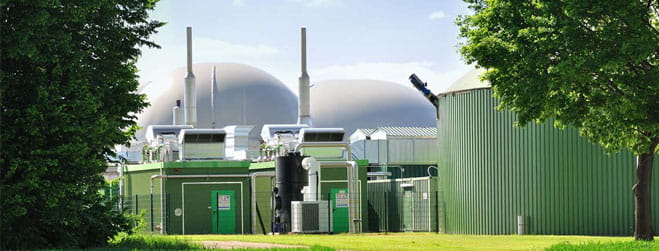
 

What options will regional plans explore?

Regional Integrated Resource Planning explores energy needs and the associated costs and benefits of a pipe or an alternative solution, such as:

Community engagement

We're gathering input from Indigenous groups and community stakeholders to help us understand what matters most. Stakeholders can include customers, intervenors, environmental groups, municipalities, government and other groups.

IRP Webinars | Stakeholder Engagement

The IRP webinars are designed to provide municipal planners, technical professionals, and regulatory stakeholders with an overview of IRP, the results of the IRP assessment on the 2026 Asset Management Plan Addendum – including a summary on projects by region – and an update on ongoing IRP pilot projects.


How the process works

One

Identifying needs

The first step is to identify the energy needs and the associated project.

Screening the need

Needs that require more urgent action may be excluded from the IRP. Additionally, projects may also be screened out by specific criteria that has been approved by the Ontario Energy Board.

Two-stage evaluation

Project alternatives will be evaluated based on technical and economic feasibility. During this evaluation stage, a decision to move forward with a traditional pipe project or an alternative will be made.

Periodic review

Changes, such as policies or timing, may impact the decisions made in the previous steps. Any changes will be reported annually.

Find Integrated Resource Planning projects in your region

See how we’re investing in our system to support future energy demand and implement lower carbon alternatives.

Current IRP Projects

Frequently asked questions

Integrated Resource Planning (IRP) is an enhanced planning strategy that enables Enbridge Gas to evaluate and consider non-pipe alternatives to defer or meet a system need instead of implementing a traditional pipeline project.

The Ontario Energy Board (our regulator) released the IRP Framework in July 2021 providing Enbridge Gas with guidance to evaluate non-pipeline alternatives to meet customer demand. Consideration is given to cost-effectiveness, risk management, public policy, the ability for alternatives to meet the system need, and Enbridge Gas’ obligation to meet customer demand safely and reliably.

Regional plans will explore both demand-side alternative solutions and supply-side alternative solutions to meet customer demand.

  • Demand side
    • Geotargeted energy efficiency programs
    • Demand response programs (i.e., adaptive thermostats)
  • Supply side
    • Upstream deliveries
    • Compressed natural gas (CNG)
    • Liquified natural gas

In some cases, alternatives may be used in the short term, acting as a “bridge” until a long-term solution can be implemented. For example, Enbridge Gas may offer CNG in the short term until an energy efficiency program can be offered in the community and enough gas savings are achieved to defer the system needs.

Enbridge Gas is developing pilot projects in the Southern Lake Huron area. For updates and information on these projects and more, check out our regional planning website.

Enbridge Gas shares information on its IRP activities to discuss its progress with IRP and the outcomes of its assessment activities for the investments in its Asset Management Plan. Where an IRP alternative has been identified as a potentially viable project to address a system constraint Enbridge Gas will also be looking for feedback on the alternative(s) which may be proposed for the community.

The integrated resource planning process allows Enbridge Gas to manage uncertainty in the path toward energy transition by potentially deferring new pipeline infrastructure with alternative solutions.

Most alternatives have a lower carbon footprint which aligns with and supports municipal GHG reduction targets. IRP projects can also help to advance lower carbon fuels and technologies to the market, contributing to the pace of energy transition, cost-effectively.

Enbridge Gas hosts annual stakeholder engagement sessions and sends newsletters to parties who have identified their interest in receiving IRP related communications. You can contact us at IRP@enbridge.com to engage the IRP department at Enbridge Gas or opt-in to receiving email updates and invitations. The IRP website will also continue to list upcoming stakeholder engagement events.

Enbridge Gas will continue to invest in communities where new or expanded natural gas service are required, engaging with local stakeholders and communities to understand their energy needs. Where a system constraint is identified, IRP efforts help ensure the most cost-effective and optimal alternatives are considered and implemented.

1. https://www.ontario.ca/page/ontario-population-projections